

Key Takeaways
- Deep sleep (slow-wave sleep) should make up 13 to 23% of total sleep — roughly 1 to 2 hours per 8-hour night. It declines naturally with age.
- Alcohol is the most destructive common lifestyle factor for deep sleep. Even 1-2 drinks suppress slow-wave sleep in the second half of the night, regardless of how sedated you feel.
- A cool bedroom (65 to 68 F / 18 to 20 C) and a hot shower 1 to 2 hours before bed both work through the same mechanism: accelerating the core body temperature drop that triggers deep sleep.
- Magnesium glycinate regulates the NMDA receptors and GABA activity directly involved in slow-wave sleep generation — the most specifically deep-sleep-targeted supplement available.
Wearable sleep trackers have made deep sleep visible for millions of people, and what they are seeing is frequently alarming. Low deep sleep percentages, fragmented slow-wave cycles, and mornings that leave people feeling unrested despite eight hours in bed are driving a growing search for specific, evidence-backed answers. Not general sleep hygiene. What specifically increases deep sleep.
This article covers what deep sleep is, how much is normal at different ages, what is reducing it, and ten approaches that have research support for increasing slow-wave sleep specifically. For the supplement most consistently associated with deep sleep improvement, the best magnesium glycinate for sleep article covers dosing, timing, and what to look for on the label.
What Is Deep Sleep and How Much Do You Need?
Deep sleep is Stage N3 of the sleep cycle, also called slow-wave sleep (SWS). It is characterised by delta waves (0.5 to 2 Hz) on EEG and is the most difficult stage to be roused from. Deep sleep concentrates in the first half of the night, in sleep cycles 1 and 2. REM sleep (associated with dreaming and emotional memory) predominates in the second half.
Deep sleep is where the most critical physical restoration happens: over 80% of daily growth hormone is released during SWS, immune cytokines are produced, the brain’s glymphatic waste-clearance system is most active (clearing the proteins associated with neurodegeneration), and declarative memories are consolidated from the hippocampus to long-term cortical storage.
| What percentage of deep sleep is normal? For most adults under 50, 13 to 23% of total sleep time. For an 8-hour night, that is roughly 62 to 110 minutes. Deep sleep declines naturally and significantly with age — the table below shows normal ranges by age group. |
| Age group | Deep sleep (% of total sleep) | For an 8-hour night |
| Children 3-12 | 20-25% | 96-120 min |
| Teenagers 13-18 | 15-20% | 72-96 min |
| Young adults 18-25 | 16-20% | 77-96 min |
| Adults 26-50 | 12-17% | 58-82 min |
| Adults 51-64 | 8-12% | 38-58 min |
| Seniors 65+ | 5-10% | 24-48 min |
These ranges are population averages. Seeing 11% or 12% on a tracker as an adult over 40 is not cause for alarm. Persistent readings below 10% alongside consistent next-day fatigue, muscle soreness, or cognitive dulling are the more meaningful signal that deep sleep is insufficient. Trackers like wearable sleep monitors estimate deep sleep from movement and heart rate variability rather than measuring brain waves directly — they are useful for trends, not precise clinical measurements.
Why You’re Not Getting Enough Deep Sleep
Before adding strategies to increase deep sleep, it helps to identify what is actively suppressing it. Most people have at least one major suppressor they have not yet addressed:
- Alcohol: the most destructive common factor. It feels sedating but displaces SWS in the second half of the night. Even 1-2 drinks measurably reduce total slow-wave sleep time.
- Afternoon caffeine: caffeine blocks adenosine receptors. Adenosine is the homeostatic pressure molecule that drives SWS intensity. Less adenosine = shallower sleep even at normal sleep duration.
- Warm bedroom: core body temperature must fall 1 to 2°C for deep sleep to initiate and sustain. A room above 70°F (21°C) impedes this.
- Inconsistent sleep schedule: deep sleep is regulated by circadian rhythm. Irregular timing disrupts the SWS window, shifting it or compressing it.
- Elevated cortisol from stress: cortisol is the primary waking hormone and directly suppresses SWS biochemistry.
- Blue light before bed: melatonin suppression from screens delays sleep onset and pushes the entire cycle later, reducing time available for deep sleep in the early night.
- Sleep apnoea: repeated arousals fragment SWS. Worth ruling out if snoring, witnessed pauses, or persistent morning fatigue are present alongside low deep sleep readings.
- Age: delta wave activity declines with age regardless of lifestyle, but lifestyle significantly modifies the rate of decline.
10 Ways to Get More Deep Sleep
Each strategy below addresses a distinct mechanism. Starting with whichever item most closely matches an identified suppressor from the section above produces the fastest results.
1. Fix Your Bedtime
Deep sleep concentrates in the first two sleep cycles — the first 3 to 4 hours after sleep onset. Circadian rhythm determines exactly when those cycles begin. A later or inconsistent bedtime compresses the deep sleep window without proportionally reducing other stages.
The most important anchor is a fixed wake time, not a fixed bedtime. The wake time sets the circadian clock; bedtime follows naturally from accumulated sleep pressure. Even one weekend of sleeping late disrupts the following week’s SWS timing.
2. Cool Your Bedroom
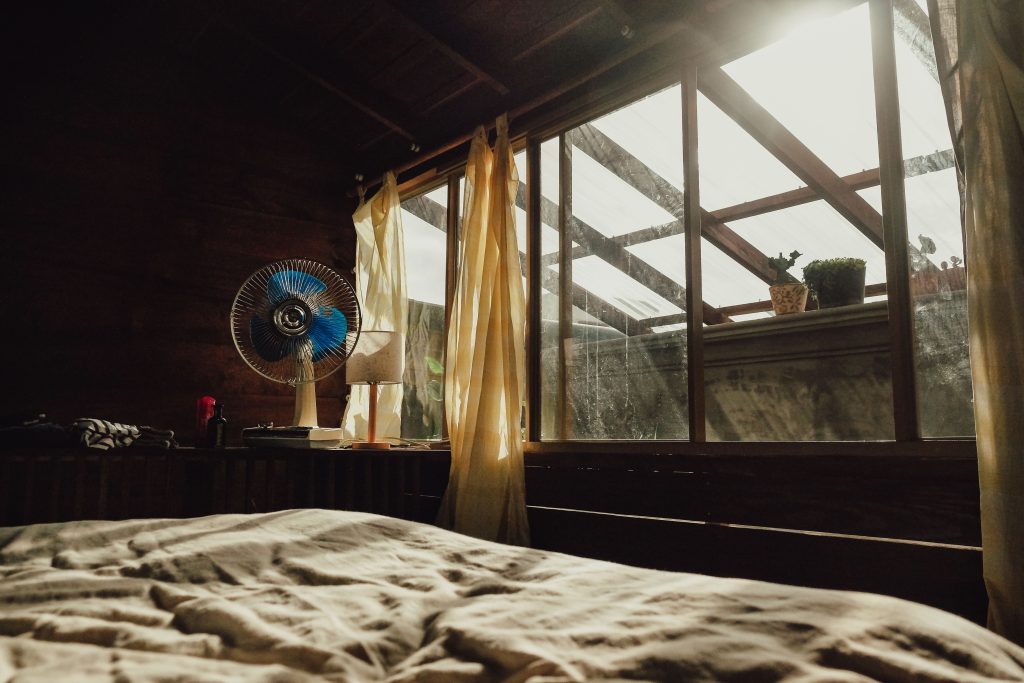
Core body temperature must fall approximately 1 to 2°C to initiate and sustain slow-wave sleep. Bedroom temperature directly controls the rate of this thermal descent. The target range is 65 to 68°F (18 to 20°C) for most adults.
Each degree above 70°F measurably reduces sleep efficiency and SWS duration. Practical approaches: programmable thermostat, ceiling fan, open window, or a cooling mattress pad. For people who want precise per-stage temperature control, an active cooling mattress cover automatically adjusts sleep surface temperature throughout the night. Wearing socks in a cool room can speed peripheral heat dispersal, paradoxically accelerating core cooling. For the connection between nighttime temperature dysregulation and cardiac arousal that wakes people from sleep, the article on a racing heart at night covers the overlapping physiology.
3. Get Morning Light
Morning bright light triggers the cortisol awakening response (CAR), a physiologically deliberate cortisol spike that anchors the 24-hour hormonal clock. The timing of this morning cortisol peak determines when melatonin rises in the evening — and therefore when the first sleep cycle, with its peak deep sleep window, begins.
10 to 30 minutes of outdoor bright light within 30 to 60 minutes of waking is the protocol supported by circadian biology research. On cloudy days, outdoor light is still 10 to 50 times brighter than indoor lighting and sufficient for circadian anchoring. For winter months or consistently cloudy climates, a sunrise alarm clock that simulates natural morning light before waking protects the circadian signal when outdoor access is limited. For the full HPA axis context of morning cortisol and its sleep implications, the how to lower cortisol naturally article covers the mechanism.
4. Take a Hot Shower or Bath Before Bed
A warm shower or bath at 40 to 42°C taken 1 to 2 hours before bed raises peripheral skin temperature, triggering peripheral vasodilation that disperses core body heat. The result: core temperature drops faster than it would without the shower, hitting the thermal threshold that initiates slow-wave sleep more efficiently.
A 2019 systematic review by Haghayegh et al. published in Sleep Medicine Reviews, which analysed 17 studies, found that warm water exposure (40 to 43°C) taken 1 to 2 hours before bed significantly reduced sleep onset latency and increased slow-wave sleep duration across most studies analysed.
| Timing is critical: 1 to 2 hours before bed, not immediately before lying down. A shower taken right before bed temporarily raises core temperature, which can delay sleep onset and counteract the benefit. |
5. Exercise Strategically

Regular aerobic exercise is among the most robust deep sleep enhancers in the sleep science literature. Two independent mechanisms: adenosine accumulation (exercise accelerates adenosine buildup, increasing homeostatic sleep pressure and SWS intensity) and the post-exercise thermal cycle (the body temperature rise from exercise, followed by its subsequent decline, promotes deep sleep initiation that evening).
Morning or afternoon timing is optimal. Vigorous exercise within 1 to 2 hours of bed keeps core temperature and sympathetic tone elevated, which can delay sleep onset. Daily moderate consistency produces greater SWS benefit than occasional intense sessions.
6. Limit Alcohol and Caffeine
Alcohol: the most impactful single lifestyle change for most people. Despite feeling sedating, alcohol suppresses slow-wave sleep in the second half of the night. As blood alcohol falls 2 to 4 hours after drinking, adenosine rebounds and REM pressure builds, displacing and fragmenting SWS. Even 1 to 2 drinks measurably reduce total slow-wave sleep on a drinking night. Cutoff: at least 3 to 4 hours before bed.
Deep sleep after quitting alcohol recovers within 1 to 4 weeks in most people as GABA receptor sensitivity recalibrates. By 4 to 8 weeks, SWS typically returns to or surpasses pre-quit baseline.
Caffeine: blocks adenosine receptors, directly reducing the homeostatic pressure that drives SWS intensity. Half-life is 5 to 7 hours. An afternoon coffee at 3pm still occupies approximately 50% of adenosine receptors at 9pm. Optimal cutoff: noon. Decaffeinated coffee contains 15 to 30% of the caffeine in regular coffee — relevant for people who switched to decaf and saw no deep sleep improvement.
7. Dim the Lights
Light exposure in the 2 hours before bed suppresses melatonin through intrinsically photosensitive retinal ganglion cells (ipRGCs), which are particularly sensitive to short-wavelength blue light from LED screens and overhead lighting. Melatonin suppression delays sleep onset and pushes the entire sleep cycle later, cutting into the early-night deep sleep window that concentrates in cycles 1 and 2.
Protocol: switch to warm-toned lighting after sunset; enable night mode on screens from 8pm onward; replace overhead lighting with table lamps. Reducing both lux and blue-light wavelength simultaneously provides better protection than either change alone. For people who cannot avoid screens in the evening due to work, blue-light filtering glasses worn from around 8pm selectively block the short-wavelength light that suppresses melatonin while allowing normal colour perception.
8. Try Sound Therapy
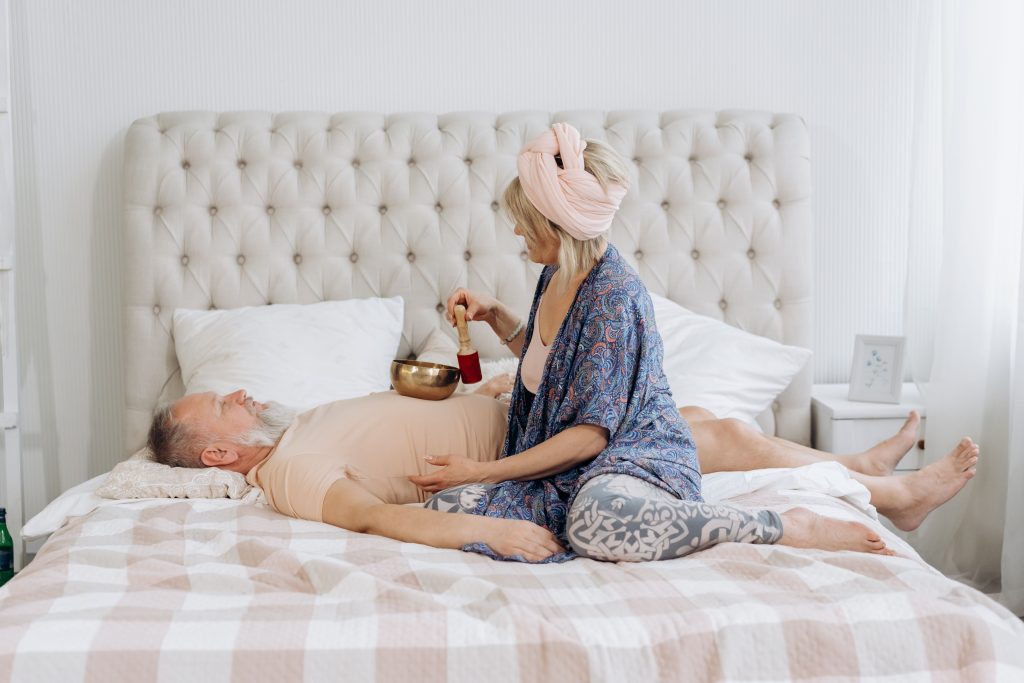
Pink noise and brown noise synchronise with the brain’s delta wave activity during slow-wave sleep, extending the depth and duration of SWS cycles. A 2017 study by Papalambros et al. published in Frontiers in Human Neuroscience found that acoustic stimulation timed to slow oscillations during sleep significantly enhanced SWS and next-morning memory performance in older adults — a population where deep sleep is naturally reduced.
Pink noise (deeper bass than white noise) is the most studied variant for SWS specifically. Both pink and brown noise are available through dedicated sleep apps and smart speakers. Binaural beats in the delta range (0.5 to 4 Hz) have some supporting evidence but require headphones, making them less practical for all-night use.
9. Supplement with Magnesium
Magnesium regulates NMDA glutamate receptors in the thalamus and hypothalamus, the brain regions directly involved in slow-wave sleep generation. It also potentiates GABA-A receptor activity, suppressing the neuronal arousal that prevents deep sleep initiation. An estimated 45 to 65% of adults fall below daily magnesium requirements, making deficiency a common and correctable contributor to insufficient SWS.
Magnesium glycinate is the best form for sleep: highest bioavailability, best GI tolerance, and the glycine chelate adds independent sleep benefits through GABA-A activation and core body temperature reduction. For dosing, timing, and what certifications to look for on the label, the magnesium glycinate for sleep article covers each variable in detail. For the broader evidence on magnesium and sleep quality, the linked article covers the sleep architecture research.
Dose: 200 to 400 mg elemental magnesium, taken 30 to 60 minutes before bed. L-theanine (100 to 200 mg) pairs well — it promotes alpha wave activity and GABA release, reducing the cognitive arousal that prevents deep sleep entry. For the L-theanine mechanism and dosing, the linked article covers the anxiety-sleep overlap in detail.
10. Manage Stress and Cortisol Before Bed
Cortisol is the body’s primary waking hormone. Its presence during the sleep window directly counteracts the physiological downshift required for slow-wave sleep. Chronic psychological stress maintains cortisol elevation into the evening, creating a persistent SWS barrier that dietary and environmental changes cannot fully compensate for.
Ashwagandha (KSM-66 or Sensoril extract, 300 to 600 mg in the evening) reduces HPA axis reactivity and evening cortisol through a well-documented adaptogenic mechanism. A 2019 RCT by Langade et al. found KSM-66 ashwagandha significantly improved non-REM sleep quality, total sleep time, and sleep efficiency versus placebo in adults with chronic stress. The ashwagandha for anxiety article covers the cortisol reduction mechanism and dose selection.
A structured 30 to 60 minute wind-down period without screens, email, or stimulating content before bed also matters. The neurological transition required for SWS cannot be achieved by jumping directly from stimulating activity to lying down. The transition time is not optional.
Sleep Deeper, Not Just Longer
Deep sleep is where the most critical restoration happens: growth hormone, glymphatic clearance, immune function, and memory consolidation all peak during slow-wave sleep. Eight hours of sleep with insufficient deep sleep produces many of the same next-day deficits as shorter sleep — fatigue, cognitive fog, poor recovery, and blunted mood.
The highest-impact changes for most people are removing the suppressor first (alcohol and afternoon caffeine cover the majority of modifiable cases), then optimising the environment (cool bedroom, consistent wake time, morning light). Magnesium glycinate in the evening, a hot shower 1 to 2 hours before bed, and sound therapy are the most specifically SWS-targeted additions. Managing stress and cortisol addresses the systemic variable that none of the above can fully compensate for when elevated.
Frequently Asked Questions
How much deep sleep do you need per night?
Adults 26 to 50 typically need 12 to 17% of total sleep as deep sleep, or roughly 58 to 82 minutes per 8-hour night. Deep sleep declines with age; adults over 65 often see 5 to 10%, which can be normal.
What percentage of deep sleep is normal?
13 to 23% for most adults under 50. Below 10% consistently, alongside feeling unrefreshed, is worth addressing through the lifestyle and environment changes above.
Why am I not getting enough deep sleep?
The most common causes are alcohol, afternoon caffeine, a bedroom that is too warm, inconsistent sleep timing, high evening cortisol from stress, and screen exposure before bed. Sleep apnoea is a medical cause worth ruling out if other factors have been addressed.
Does alcohol affect deep sleep?
Yes, significantly. Even 1 to 2 drinks suppress slow-wave sleep in the second half of the night through adenosine rebound and REM displacement. The sedation feels like deep sleep but is not. Deep sleep typically recovers within 1 to 4 weeks after stopping alcohol.
What supplements increase deep sleep?
Magnesium glycinate (200 to 400 mg elemental before bed) has the strongest mechanism for SWS specifically, through NMDA and GABA-A regulation. Ashwagandha reduces cortisol that suppresses SWS. L-theanine reduces arousal that prevents deep sleep entry.
Does exercise increase deep sleep?
Yes. Regular aerobic exercise is one of the most consistent SWS enhancers, through adenosine buildup and the post-exercise thermal cycle. Morning or afternoon timing is optimal; vigorous exercise within 2 hours of bed can delay sleep onset.
How do I know if I am getting enough deep sleep?
Wearable trackers estimate deep sleep from movement and heart rate variability. They are useful for trends over time, not precise nightly measurements. Feeling physically restored and cognitively sharp after 7 to 9 hours is the most reliable indicator. Persistent morning fatigue, muscle soreness, and brain fog suggest insufficient deep sleep regardless of total time in bed.
