

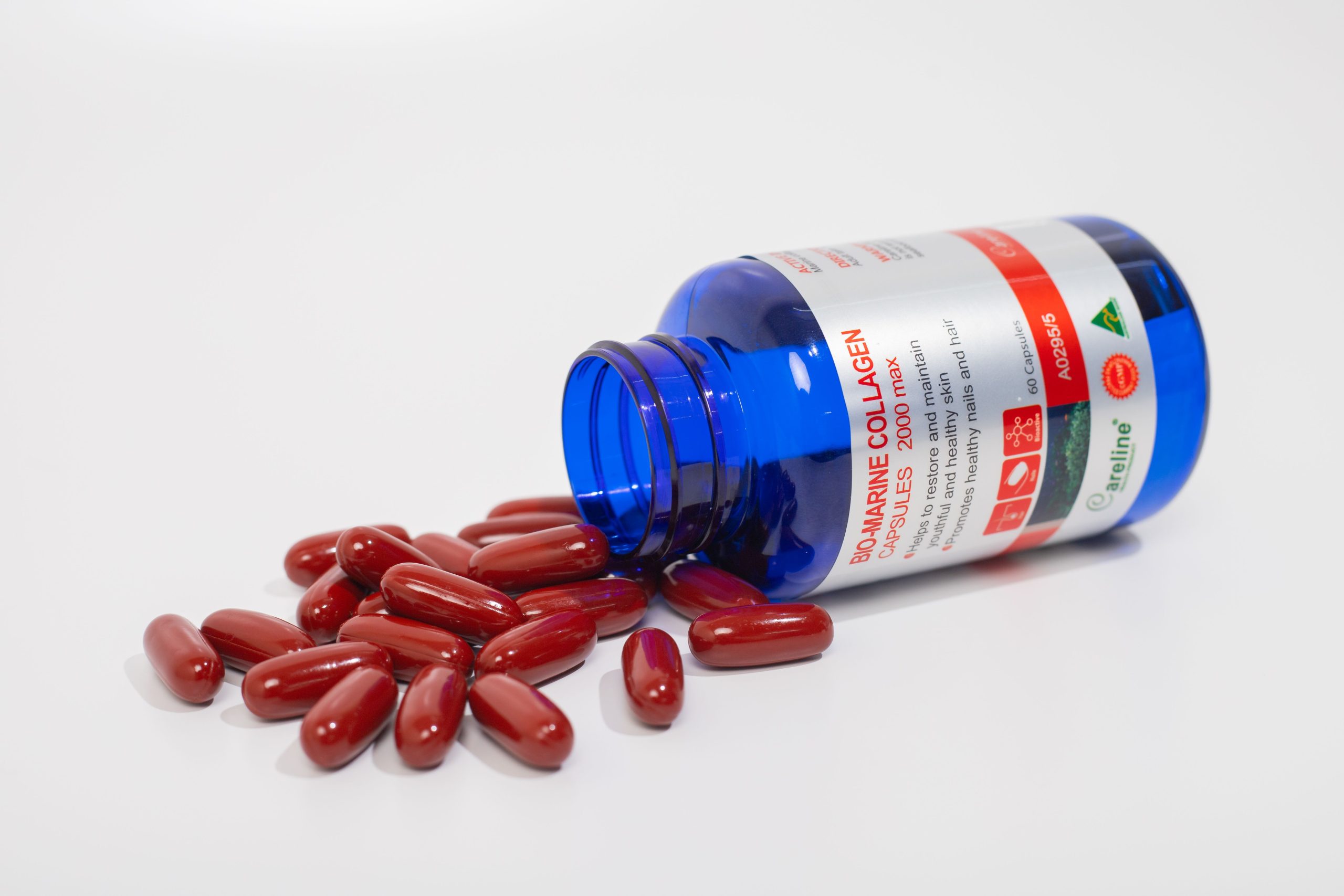
Key Takeaways
- Marine collagen is predominantly Type I collagen from fish, hydrolyzed into small peptides absorbed approximately 1.5 times more efficiently than bovine collagen.
- There is no evidence marine collagen causes cancer. Collagen peptides are digested to amino acids identical to those from any dietary protein, the body cannot preferentially direct them to cancer cells.
- Marine collagen is best for skin, hair, and nails. Bovine adds Type III collagen for gut health. Neither is universally better, the right choice depends on the goal.
- Anyone with a fish or shellfish allergy must avoid marine collagen. This is the most important contraindication.
Marine collagen supplements have become one of the most widely sold collagen products, driven by claims of superior bioavailability and strong evidence for skin and hair applications. But the category also carries persistent questions: Does it cause cancer? Is it safe during pregnancy? How does it actually compare to bovine collagen? These are the questions most buyers research before purchasing and most supplement articles fail to answer directly.
This article covers what marine collagen is and how it works, its evidence-backed benefits by application, a direct comparison with bovine collagen, side effects including the most important safety contraindication, the cancer question answered mechanistically, and what to look for on the label. For context on why collagen supplementation is relevant in the first place, the article on collagen deficiency symptoms covers the signs of declining collagen production and the tissues most affected.
What Is Marine Collagen and Why Is It More Bioavailable?
Marine collagen is collagen derived primarily from fish, specifically from the skin, scales, and bones, which are high in collagen-rich connective tissue. It is composed of over 90% Type I collagen, the same collagen type that forms the structural foundation of skin, hair, nails, tendons, ligaments, and bone.
The terms “hydrolyzed marine collagen,” “marine collagen peptides,” and “hydrolysed marine collagen peptides” all refer to the same thing: collagen that has been enzymatically broken down into smaller fragments called peptides. This hydrolysis step is essential, non-hydrolyzed collagen molecules are too large to be meaningfully absorbed through the intestinal wall. Any marine collagen supplement worth buying will have “hydrolyzed” or “peptides” somewhere on the label.
Marine collagen peptides are smaller than bovine collagen peptides, typically 800 to 2,000 daltons in molecular weight versus 2,000 to 5,000 daltons for bovine. This size difference is why marine collagen is approximately 1.5 times more bioavailable: smaller peptides cross intestinal epithelial cells more efficiently, reaching the bloodstream in higher concentrations after the same oral dose. For a complementary marine supplement, the benefits of fish oil covers the omega-3 side of fish-derived nutritional support.
Marine Collagen Benefits
Skin

Type I collagen makes up 70 to 80% of the dermis (the skin’s structural layer). As collagen production naturally declines from the mid-20s onward, skin loses elasticity and hydration. Marine collagen supplementation works by stimulating fibroblasts, the cells responsible for producing new collagen, to increase synthesis.
A 2021 randomised controlled trial published in Skin Pharmacology and Physiology found that hydrolysed marine collagen supplementation at 10g per day for 12 weeks significantly improved skin elasticity and moisture retention in women over 40 compared to placebo. Additional clinical evidence supports reduction in wrinkle depth and improved UV stress resistance. Marine collagen’s small peptide size makes it specifically well-suited for skin applications compared to larger bovine peptides.
For people looking for a marine collagen product specifically formulated for skin with co-factors already included, a marine collagen supplement combining peptides with hyaluronic acid and vitamin C provides the cofactor stack most relevant to skin elasticity outcomes in a single product.
For complementary skin support alongside marine collagen, zinc supplementation supports collagen synthesis directly as a cofactor in the enzymes that cross-link collagen fibres. Vitamin D is also essential for skin barrier function and collagen regulation. Niacinamide and zinc together provide additional dermal support that stacks well with collagen supplementation.
Hair Growth and Strength
Marine collagen supports hair through two distinct mechanisms. First, it provides glycine, proline, and hydroxyproline, the specific amino acids the body uses to synthesise keratin, the structural protein of hair. Second, collagen acts as an antioxidant, potentially protecting hair follicle cells from free radical damage that can impair the hair growth cycle.
Marine collagen’s advantage over bovine for hair specifically is its bioavailability: the higher absorption rate means more amino acids reach the follicle environment per gram consumed. Multiple low-competition searches reflect genuine consumer interest in marine collagen for hair growth, the evidence is mechanistically sound even if large-scale RCTs focused specifically on hair are fewer than those for skin. For people who want a supplement built specifically around marine complex for hair with multiple published RCTs behind it, a marine-protein hair supplement with documented clinical trial support is one of the most studied products in this space.
Joints and Cartilage
Hydrolyzed collagen peptides have been shown to accumulate in cartilage tissue following oral supplementation, where they stimulate chondrocytes (the cells responsible for maintaining cartilage) to produce more collagen. A 2016 randomised controlled trial found that athletes taking collagen hydrolysate at 15g per day reported significantly less joint pain and stiffness compared to placebo, with improvements visible at 12 weeks. Both marine and bovine collagen are effective for joint support; the research does not show a clear advantage for either form specifically. For athletes or active adults prioritising joint recovery, a collagen peptide supplement dosed at the 15g level studied in joint research is formulated around the clinical dose range.
Bone Density
Bone is approximately 90% Type I collagen by dry weight, the mineral structure (calcium phosphate) crystallises onto a collagen protein scaffold. Marine collagen supplements contribute the amino acid building blocks for this scaffold. Several studies show improved bone mineral density markers with collagen supplementation alongside calcium and vitamin D. The most benefit appears in postmenopausal women, where bone remodeling accelerates and collagen production slows simultaneously.
Nails

A 2017 study published in the Journal of Cosmetic Dermatology found that collagen peptide supplementation at 2.5g per day for 24 weeks increased nail growth rate by 12% and reduced the frequency of broken nails by 42% compared to baseline. Marine collagen’s Type I composition and bioavailability make it well-suited for nail applications, which rely on the same amino acid profile as skin.
Marine Collagen Peptides Side Effects
| Fish or shellfish allergy is the most important contraindication for marine collagen. People with a documented fish or shellfish allergy must avoid marine collagen supplements entirely, an allergic reaction including hives, swelling, or anaphylaxis is possible. This includes products derived from tilapia, cod, salmon, snapper, or any other fish. |
Beyond allergy, marine collagen supplements are generally well-tolerated at recommended doses. Documented side effects:
- Digestive discomfort: nausea, bloating, or a feeling of heaviness, particularly when starting at high doses. Beginning at 5g per day and increasing over 2 weeks reduces this.
- Taste and odour: lower-quality marine collagen powders can have a fishy smell or aftertaste. High-quality hydrolyzed products from reputable sources are typically odourless and flavourless.
- Calcium content: bone-derived marine collagen products can be elevated in calcium. Relevant at high doses for people already supplementing calcium.
- Drug interactions: not clinically significant at standard supplement doses. No known interactions with common medications.
Does Marine Collagen Cause Cancer?
No. There is no credible evidence that marine collagen supplements cause, promote, or increase the risk of cancer, including breast cancer.
This concern appears frequently in searches and deserves a direct explanation. The confusion typically stems from cancer biology research showing that collagen remodeling occurs in tumour microenvironments. What this research is describing is the body’s own structural collagen being reorganised by cancerous tissue, not supplemental collagen being recruited by tumours.
When marine collagen peptides are consumed, digestive enzymes break them down into free amino acids (primarily glycine, proline, and hydroxyproline) before they are absorbed into the bloodstream. At that point, these amino acids are chemically identical to those obtained from eating fish, chicken, or any protein-containing food. The body has no mechanism for directing these amino acids preferentially to cancer cells rather than healthy tissue.
| Collagen peptides are digested to amino acids, the same amino acids obtained from any protein food. There is no known mechanism by which supplemental marine collagen peptides cause or promote cancer growth. The concern has no mechanistic basis and no clinical evidence supporting it. |
For people with an active cancer diagnosis: discuss all supplements, including marine collagen, with your oncologist before use. This is a general recommendation for any supplement during cancer treatment, not specific to marine collagen. Some treatment protocols have particular dietary protein considerations that an oncologist can advise on directly.
Is Marine Collagen Safe During Pregnancy?
Limited clinical safety data exists for collagen supplementation during pregnancy. Marine collagen has specific considerations that extend beyond general supplement caution: fish-derived products carry some risk of heavy metal contamination (mercury, lead) that varies with species and sourcing quality, and the body’s increased nutritional demands during pregnancy interact unpredictably with supplemental protein sources.
Most healthcare providers apply a precautionary approach to non-essential supplements during pregnancy: if safety data is limited, avoid unless there is a specific clinical reason. If a person is already taking marine collagen and becomes pregnant, or wants to continue during pregnancy: choose a third-party tested product from wild-caught, low-mercury fish species (pollock, tilapia, cod are lower-risk), and discuss with an obstetrician before continuing.
What to Look For in Marine Collagen Supplements
“Best marine collagen supplement” searches reflect a genuine buying decision where label reading matters more than in most supplement categories, primarily because heavy metal contamination is a real quality variable unique to marine-derived products. These seven criteria separate reliably effective products from those that cannot be properly evaluated:
- “Hydrolyzed” or “peptides” on the label: required for absorption. Non-hydrolyzed collagen molecules cannot meaningfully cross the intestinal wall. If the label says only “collagen” without specifying hydrolyzed or peptides, the bioavailability is unknown.
- Wild-caught fish source: lower heavy metal exposure than farmed fish. Look for species name (pollock, cod, tilapia, snapper) or “wild-caught” explicitly stated. Farmed fish from poorly monitored sources carry higher contamination risk.
- Third-party testing: NSF, USP, Informed Sport, or Informed Choice certification confirms label accuracy and screens for heavy metals. More important for marine collagen than for plant-based or bovine collagen because of the fish sourcing variable.
- Clinical dose: studies use 5 to 15g of collagen peptides per day. Check that the serving size provides a meaningful dose. Many capsule formats provide only 2g per serving, requiring 5 to 7 capsules to reach a clinically studied amount.
- Minimal additives: no added sugars, artificial sweeteners, or artificial flavours are necessary in a quality marine collagen product. A short ingredient list is a positive signal.
- Form: powder (most versatile and highest per-dose collagen; can be added to coffee, smoothies, or food; typically odourless in quality products); capsules (convenient but lower dose per serving); liquid (convenient; shorter shelf life).
- Sustainable sourcing: MSC (Marine Stewardship Council) certification indicates the fish source meets sustainability standards. Relevant for environmental considerations.
For a third-party tested marine collagen powder in the clinically studied dose range, a wild-caught marine collagen peptide supplement verified for heavy metal content is one approach for prioritising both purity and sourcing transparency.
Why Choose Marine Collagen Specifically?
Marine collagen is one form of collagen supplement among several. The case for choosing it over bovine, chicken, or plant-based alternatives depends on the specific goal and individual circumstances. These are the situations where marine collagen is the most rational choice:
- Skin, hair, and nail goals: marine collagen’s small peptide size produces the highest bioavailability per gram, meaning more collagen-building amino acids reach the skin, hair follicles, and nail matrix compared to bovine at the same dose. For appearance-focused goals, this absorption advantage is clinically meaningful.
- Higher bioavailability per gram: marine peptides (800 to 2,000 daltons) are absorbed approximately 1.5 times more efficiently than bovine peptides (2,000 to 5,000 daltons). For someone on a limited dose (5g per day), marine collagen delivers more usable amino acids than the same dose of bovine.
- Pescatarian diets: marine collagen is appropriate for people who eat fish but avoid beef or pork. It is not suitable for vegetarians or vegans.
- Kosher or halal requirements: marine collagen from certified sources is compatible with both kosher and halal dietary requirements, whereas bovine collagen is not halal or kosher unless from specific certified processing.
- No BSE or prion concerns: bovine collagen carries a theoretical (now very low) historical concern around BSE (bovine spongiform encephalopathy). Marine collagen has no equivalent risk.
- Cleaner taste profile: high-quality hydrolyzed marine collagen powder is typically odourless and flavourless, making it easy to add to coffee, water, or smoothies. Some bovine collagen powders have a stronger taste.
| Marine collagen is not appropriate for people with fish or shellfish allergies. For people who avoid all animal products, neither marine nor bovine collagen is suitable, plant-based collagen boosters (vitamin C, silica, zinc) support the body’s own collagen synthesis without animal-derived ingredients. |
Top Marine Collagen Brands and Where to Buy
The marine collagen market includes a wide range of products at different quality levels. The following brands are among the most widely recognised and consistently reviewed options, covering different price points and sourcing approaches. As with any supplement, verify that the product you choose is third-party tested and lists elemental marine collagen content per serving.
Well-Established Brands
- Vital Proteins Marine Collagen: one of the most widely sold marine collagen brands in the US. Wild-caught fish, available as powder and capsules. Widely stocked at Target, Costco, Walmart, and Amazon. One of the most reviewed options in the category.
- Sports Research Marine Collagen Peptides: wild-caught fish, hydrolyzed, unflavoured powder. Third-party tested. Positioned as a mid-price option with a strong quality-to-cost ratio. Available on Amazon and iHerb.
- Ancient Nutrition Marine Collagen: hydrolyzed Type I marine collagen from wild-caught fish. Available in powder and capsule form. Widely stocked on Amazon, iHerb, and the brand’s own website.
- NeoCell Marine Collagen: hydrolyzed marine collagen, available in capsule and powder form. One of the longer-standing brands in the collagen supplement space. Stocked at Walmart, CVS, and Amazon.
- BUBS Naturals Collagen Peptides: hydrolyzed marine collagen from wild-caught pollock. NSF Certified. One of the more transparency-focused brands in the category.
- Codeage Marine Collagen: wild-caught hydrolyzed marine collagen. Third-party tested. Available at Amazon and the brand website.
Where to Buy Marine Collagen
- Amazon: the widest selection of brands at competitive pricing. Subscribe and save discounts available. Read verified purchase reviews carefully, look for reviewers who note specific benefits over several weeks rather than short-term impressions.
- Costco: stocks marine collagen in bulk formats at competitive per-gram pricing. Selection is more limited; typically stocks one or two major brands. Good value for people who have already chosen a product.
- Target: stocks mainstream brands including Vital Proteins. Convenient for in-person purchase. Good for first-time buyers who want to see the product before purchasing online.
- iHerb: a supplements-focused retailer with a wide range of marine collagen products, including international brands not available in mainstream retail. Competitive pricing with a strong review system.
- Thrive Market: membership-based retailer focused on organic and premium supplement brands. Good selection of clean-label marine collagen products at below-retail prices for members.
- CVS and Walgreens: limited selection but accessible for same-day purchase. Pricing tends to be higher than online retailers. Useful for brand familiarity or when speed of purchase matters.
| Regardless of brand or retailer, verify: (1) “hydrolyzed” or “peptides” on the label, (2) wild-caught fish source specified, (3) third-party testing noted, and (4) serving size that delivers 5 to 15g collagen peptides per dose. These four criteria apply across all brands. |
Not Just Skin Deep
Marine collagen supplements have the most consistent clinical evidence base of any collagen form, primarily because their small peptide size produces reliable bioavailability and their Type I composition matches the tissue targets where benefits are best documented, skin, hair, nails, and bone. The cancer concern, which drives significant search volume, has no mechanistic basis and no supporting evidence. Collagen peptides are digested to amino acids before absorption; the body does not distinguish their origin.
The fish allergy contraindication is the one safety consideration that is real and non-negotiable. Beyond that, buying criteria, hydrolyzed, wild-caught, third-party tested, appropriate dose, determine whether a product is worth taking. The label should confirm all four before purchase.
Frequently Asked Questions
What does marine collagen do?
Marine collagen provides hydrolysed Type I collagen peptides that stimulate collagen synthesis in skin, hair, nails, joints, and bone. The peptides are absorbed and delivered to target tissues where they signal fibroblasts and other collagen-producing cells to increase production.
Is marine collagen better than bovine collagen?
For skin, hair, and nails: yes, because of smaller peptide size and higher bioavailability. For gut health: bovine is better, because it includes Type III collagen. For general use, marine is more efficient per gram but bovine is lower cost. Choose based on the specific application.
Can marine collagen cause cancer?
No. There is no evidence marine collagen causes or promotes cancer. Collagen peptides are digested to amino acids before absorption, the same amino acids found in any dietary protein. The body has no mechanism for directing these preferentially to cancer cells.
Does collagen increase the risk of breast cancer?
No clinical evidence supports a link between collagen supplementation and increased breast cancer risk. The concern arises from confusion between supplemental collagen and the body’s own collagen remodeling in tumour environments, which are entirely different processes.
What are the side effects of marine collagen peptides?
Fish or shellfish allergy is the most important, marine collagen must be avoided by people with a fish allergy. Other effects include mild digestive discomfort at high doses and, in lower-quality products, a fishy taste or smell.
Is marine collagen safe during pregnancy?
Safety data is limited. Marine-specific concerns include potential heavy metal contamination from fish sources. Most providers recommend caution with non-essential supplements during pregnancy. Discuss with your obstetrician before use.
How much marine collagen should I take per day?
Clinical studies use 5 to 15g of hydrolysed marine collagen peptides per day. 10g per day is the most commonly studied dose for skin outcomes. Check that the product’s serving size delivers a meaningful dose, particularly with capsule formats.
