

Key Takeaways
- Fibre is subtracted from total carbs when calculating net carbs. Net carbs = total carbs – dietary fibre. High-fibre foods have the best net carb efficiency of any carbohydrate source.
- Non-starchy vegetables are the most reliable high-fibre, low-carb category. Avocado has just 1.8g net carbs per 100g with 6.7g fibre. Spinach, asparagus, and zucchini all have under 2g net carbs per 100g.
- Chia seeds (34g fibre / 7.7g net carbs per 100g) and ground flaxseed (27g fibre / 1.6g net carbs per 100g) are the highest-fibre, lowest net-carb foods available in any category.
- Legumes are high in fibre but moderate in net carbs. They fit moderate low-carb and diabetic diets (50-100g net carbs/day) but are difficult to include in strict keto (under 25g/day). Edamame is the exception.
Most high-fibre foods are also high in carbohydrates, whole grains, fruit, legumes, starchy vegetables. For anyone eating low-carb, finding foods that deliver meaningful fibre without a large carb load requires knowing which foods have the best fibre-to-net-carb ratio.
This is not a small problem. Low-carb and ketogenic diets frequently cause constipation, reduced microbiome diversity, and blood sugar volatility – all consequences of insufficient dietary fibre. The foods below solve this directly. Every table uses data from the USDA FoodData Central database and lists fibre, total carbs, and net carbs per 100g so you can make direct comparisons.
Net Carbs vs. Total Carbs: Why Fibre Changes Everything
On any nutrition label, “total carbohydrates” includes dietary fibre, starches, and sugars. But dietary fibre is not absorbed as glucose. It passes through the small intestine undigested, is fermented by bacteria in the large intestine, and does not raise blood sugar.
This means fibre can be subtracted from total carbs to get the metabolically relevant number:
Net carbs = Total carbohydrates – Dietary fibre
Example: avocado has 8.5g total carbs per 100g and 6.7g fibre. Net carbs: 1.8g. An identical total-carb food with zero fibre would have 8.5g net carbs, nearly five times more metabolic carbohydrate load.
This is why high-fibre foods are the most efficient carbohydrate choices on a low-carb diet. A food that looks high in carbs on the label can have a negligible net carb count and a significantly lower blood glucose response. Research published in the American Journal of Clinical Nutrition (Slavin, 2005) confirmed that high dietary fibre intake consistently lowers postprandial glucose and insulin responses across a wide range of food types.
| On keto, most targets are 20-50g net carbs per day, not total carbs. Always check both total carbs and fibre on a label before excluding a food from your plan. |
The Complete High Fiber Low Carb Foods List
Organised by food category with fibre, total carbs, and net carbs per 100g. Data: USDA FoodData Central.
Non-Starchy Vegetables
The most practical category for daily eating. These form the foundation of any high-fibre, low-carb diet, low in net carbs, rich in micronutrients, and available year-round.
| Vegetable | Fibre (g / 100g) | Total carbs (g / 100g) | Net carbs (g / 100g) |
| Avocado | 6.7 | 8.5 | 1.8 |
| Artichoke hearts | 5.4 | 10.5 | 5.1 |
| Kale (raw) | 3.6 | 8.8 | 5.2 |
| Brussels sprouts | 3.8 | 9.0 | 5.2 |
| Green beans | 3.4 | 7.1 | 3.7 |
| Broccoli | 2.6 | 6.6 | 4.0 |
| Spinach (raw) | 2.2 | 3.6 | 1.4 |
| Cauliflower | 2.0 | 5.0 | 3.0 |
| Asparagus | 2.1 | 3.9 | 1.8 |
| Cabbage | 2.5 | 5.8 | 3.3 |
| Celery | 1.6 | 3.0 | 1.4 |
| Zucchini | 1.1 | 3.1 | 2.0 |
Avocado stands out: the highest fibre content in this category at near-zero net carbs, plus fat-soluble vitamin support and satiety from healthy monounsaturated fats. Spinach, celery, and asparagus are the lowest net-carb options overall, useful for strict keto targets. Broccoli, Brussels sprouts, and kale provide more total fibre per serving and suit moderate low-carb approaches.
Nuts and Seeds
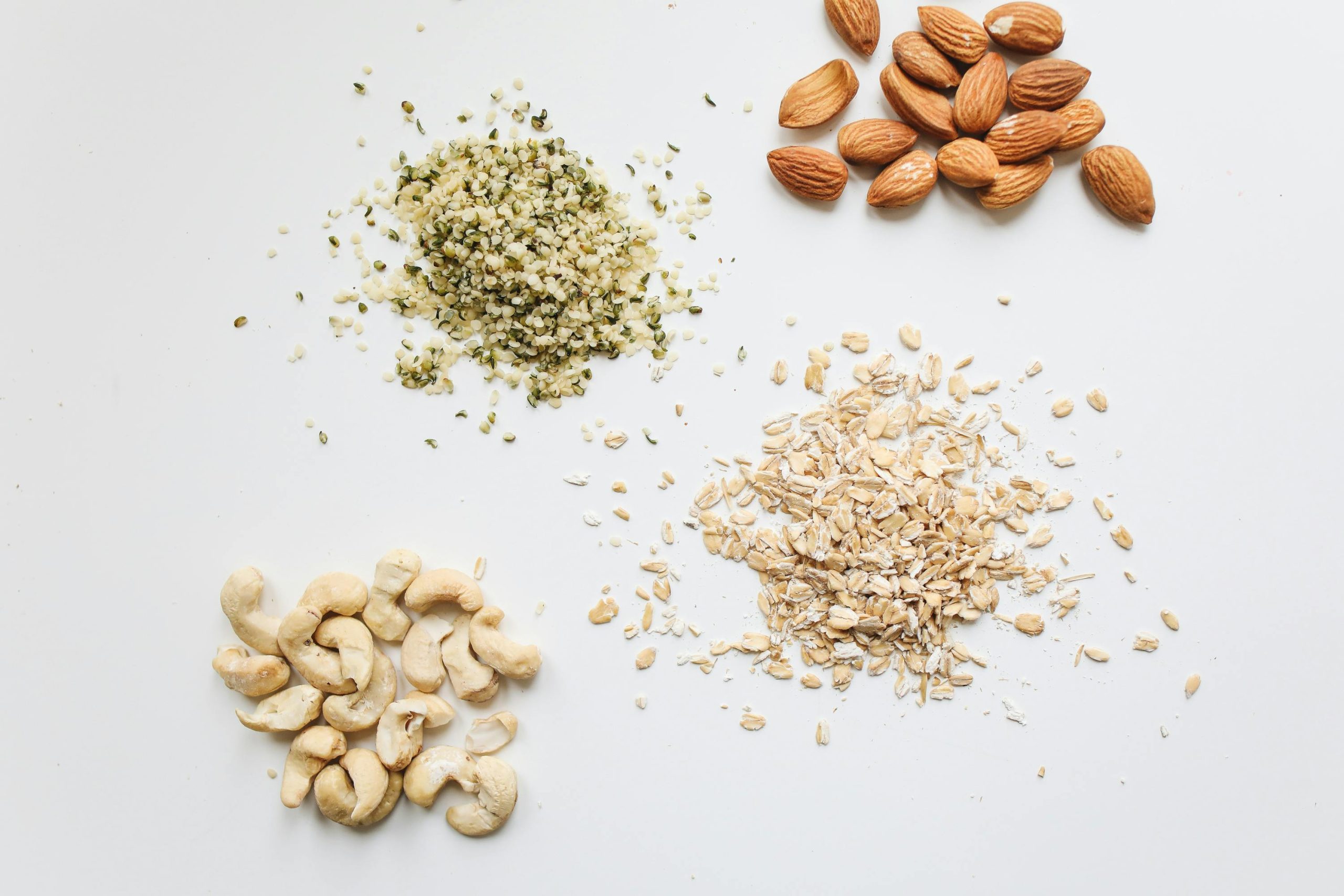
The highest fibre-to-net-carb ratio of any food group, with the addition of protein and healthy fats. Two foods stand apart from the rest:
Ground flaxseed has 27g fibre per 100g and just 1.6g net carbs, the single best fibre-to-net-carb ratio of any food. Chia seeds deliver 34g fibre per 100g with 7.7g net carbs. Both form gels when hydrated, which slows gastric emptying and blunts post-meal glucose rises. A 2017 study in the Journal of Nutrition and Metabolism found chia seed supplementation significantly reduced postprandial blood glucose in adults with type 2 diabetes.
| Food | Fibre (g / 100g) | Total carbs (g / 100g) | Net carbs (g / 100g) |
| Chia seeds | 34.4 | 42.1 | 7.7 |
| Flaxseed (ground) | 27.3 | 28.9 | 1.6 |
| Almonds | 12.5 | 21.6 | 9.1 |
| Hazelnuts | 9.7 | 17.0 | 7.3 |
| Pecans | 9.6 | 13.9 | 4.3 |
| Sunflower seeds | 8.6 | 20.0 | 11.4 |
| Brazil nuts | 7.5 | 12.3 | 4.8 |
| Walnuts | 6.7 | 13.7 | 7.0 |
| Pumpkin seeds | 6.0 | 10.7 | 4.7 |
Foods high in folate, including seeds, legumes, and dark leafy greens, contribute to one-carbon metabolism that supports DNA synthesis and gut cell renewal. Pumpkin seeds, sunflower seeds, and almonds also deliver magnesium, a mineral that supports gut motility, sleep architecture, and HPA axis regulation alongside the fibre they provide.
Low-Carb Fruits
Most fruit is too high in fructose for strict keto. These options deliver meaningful fibre at manageable net carb counts:
| Fruit | Fibre (g / 100g) | Total carbs (g / 100g) | Net carbs (g / 100g) |
| Avocado* | 6.7 | 8.5 | 1.8 |
| Coconut (unsweetened) | 9.0 | 15.2 | 6.2 |
| Raspberries | 6.5 | 11.9 | 5.4 |
| Blackberries | 5.3 | 9.6 | 4.3 |
| Olives | 3.3 | 6.3 | 3.0 |
| Strawberries | 2.0 | 7.7 | 5.7 |
*Avocado is botanically a fruit. Berries, raspberries and blackberries in particular have the best fibre-to-net-carb ratio of any conventional fruit and are rich in anthocyanins with evidence for anti-inflammatory and blood sugar-stabilising effects. Coconut (unsweetened, desiccated) is the highest-fibre fruit on the list at 9g per 100g, with a moderate 6.2g net carbs.
Dairy and Eggs
Important low-carb foods, but poor fibre sources on their own. The strategy is pairing them with high-fibre additions:
- Full-fat Greek yogurt (~0g fibre, 4-6g net carbs per 100g): low-carb base, add a tablespoon of ground flaxseed and a handful of raspberries to convert it into a high-fibre meal.
- Hard cheese (near-zero carbs, near-zero fibre): pair with celery, avocado, or non-starchy vegetables.
- Eggs (zero carbs, zero fibre): most fibre-efficient preparation is with spinach and avocado, adding 2.2g and 6.7g fibre per 100g respectively.
Legumes, High Fibre, Know Your Net Carb Target
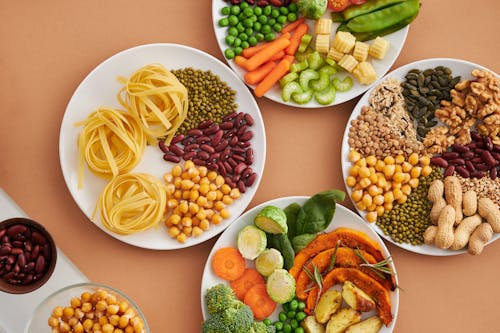
Legumes are among the highest-fibre foods available, but carry substantially more net carbs than vegetables or nuts. Whether they fit your diet depends on your daily target:
| Legume (cooked) | Fibre (g / 100g) | Total carbs (g / 100g) | Net carbs (g / 100g) |
| Edamame | 5.2 | 9.9 | 4.7 |
| Lentils | 7.9 | 20.1 | 12.2 |
| Black beans | 8.7 | 23.7 | 15.0 |
| Chickpeas | 7.6 | 27.4 | 19.8 |
For strict keto (20-25g net carbs/day): even a small serving of lentils or chickpeas uses most of the daily budget. Edamame is the practical exception, at 4.7g net carbs per 100g, it fits almost any low-carb target and delivers a meaningful 5.2g fibre.
For moderate low-carb or diabetic diets (50-100g net carbs/day): legumes are excellent. Their soluble fibre content produces a lower glycaemic response than their total carb count implies. Half a cup (100g) of cooked black beans provides 8.7g fibre, which along with its resistant starch significantly blunts the glucose response from its 15g net carbs. Research on chromium and insulin receptor sensitivity is directly relevant here, chromium deficiency amplifies the blood sugar impact of any carbohydrate source, including legumes.
How to Use High Fiber Low Carb Foods in Practice
For breakfast: chia seed pudding (chia seeds soaked overnight in unsweetened almond milk) delivers 34g fibre per 100g of chia with minimal net carbs, add raspberries and a teaspoon of ground flaxseed for additional fibre. Scrambled eggs with spinach and avocado combines protein, near-zero-net-carb fibre, and healthy fat. Greek yogurt becomes a high-fibre meal with a tablespoon of ground flaxseed and a handful of blackberries.
For snacks: almonds, pumpkin seeds, celery with nut butter, or a small serving of berries keep net carbs low while delivering meaningful fibre. Avocado is the single highest-fibre, lowest net-carb whole food available, it requires no preparation and works alone.
For diabetes and blood sugar management: soluble fibre slows gastric emptying and reduces the glucose absorption rate, lowering postprandial blood sugar response independently of total carb count. Prioritise avocado, chia, flaxseed, and non-starchy vegetables at every meal. Apple cider vinegar taken before high-carbohydrate meals modestly blunts the glucose response through amylase inhibition, a practical adjunct. Brown rice versus white rice illustrates the same principle at the grain level: higher fibre content produces a meaningfully lower glycaemic response from the same total carb amount.
For weight loss: high fibre increases satiety through three mechanisms, physical bulk, delayed gastric emptying, and short-chain fatty acid production that stimulates PYY and GLP-1 release (the satiety hormones). Combined with low carbohydrate intake, this keeps insulin low while maximising the fullness signal per calorie. Inositol supports the insulin receptor signalling downstream of this relevant for anyone managing blood sugar alongside weight.
Build Your Plate on Fibre, Not Just Low Carbs
The most common mistake on a low-carb diet is treating fibre as incidental, something that happens if you eat vegetables, rather than something to actively plan for. The consequence is predictable: constipation within the first two weeks, worsening gut microbiome diversity over months, and less stable blood sugar than the diet is capable of producing when fibre is adequate.
The foods in this list are not supplements to a low-carb diet. They are the structural foundation of one that actually works over the long term. Avocado, leafy greens, chia seeds, flaxseed, and berries are the daily anchors. Nuts and seeds fill the snack gap. Non-starchy vegetables supply volume and micronutrients at near-zero net carb cost. Legumes serve the moderate low-carb approach well when fibre diversity matters.
The pattern: build every meal around at least one fibre anchor from this list, then add protein and fat around it. This is the difference between a low-carb diet that produces lasting results and one that produces short-term weight loss and long-term digestive problems.
Frequently Asked Questions
Does fibre count toward carbs on keto?
No. Dietary fibre is subtracted when calculating net carbs. Net carbs = total carbohydrates – dietary fibre. Fibre does not raise blood glucose and is excluded from the carb count on ketogenic diets.
How do you calculate net carbs from a food label?
Subtract the dietary fibre grams from the total carbohydrate grams. Example: 18g total carbs – 6g fibre = 12g net carbs. Some keto approaches also subtract half of sugar alcohol grams.
What high fiber low carb vegetables are best?
Avocado (1.8g net carbs, 6.7g fibre per 100g), spinach (1.4g net carbs), and celery (1.4g net carbs) are the lowest net-carb options. Broccoli, Brussels sprouts, and kale provide more total fibre per serving and suit slightly higher carb targets.
Are legumes allowed on a low-carb diet?
It depends on your daily net carb target. Edamame (4.7g net carbs) fits almost any low-carb approach. Lentils and black beans are better suited to moderate low-carb (50-100g net carbs/day) than strict keto. Their high fibre reduces their glycaemic impact significantly compared to their total carb count.
What seeds are highest in fibre on a low-carb diet?
Ground flaxseed (27g fibre, 1.6g net carbs per 100g) and chia seeds (34g fibre, 7.7g net carbs) are the two highest-fibre, lowest net-carb foods available across all categories. Both are practical additions to yogurt, smoothies, and baked goods.
